Myanmar’s Deadly Earthquake: A Former Imam’s Heartbreaking Loss
The Man Who Lost 170 Loved Ones in Myanmar’s Devastating Earthquake
A City Shaken: The Deadly Quake That Changed Lives Forever
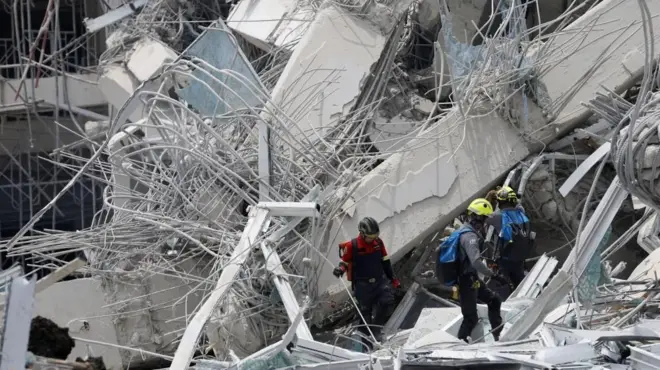
On a quiet Friday afternoon in Myanmar’s Sagaing region, the peaceful echoes of the call to prayer filled the air as hundreds of Muslims gathered at mosques for the last Friday prayers of Ramadan. Just moments later, at 12:51 local time (06:21 GMT), a devastating earthquake struck, reducing mosques and homes to rubble and claiming thousands of lives.
Three mosques collapsed in an instant, including the Myoma Mosque, the largest in the region, burying hundreds of worshippers inside. Among the victims was a close-knit Muslim community, now left in mourning, struggling to comprehend the scale of their loss.
A Former Imam’s Unimaginable Grief
Hundreds of kilometers away in the Thai border town of Mae Sot, Soe Nay Oo, the former imam of Myoma Mosque, felt the tremors. Little did he know that the earthquake had claimed the lives of around 170 people he held dear—family, friends, and members of his former congregation.
“I can’t hold back my tears when I think about all the people we lost,” he shared. “The children who are now orphans, the families torn apart. It’s unbearable.”
The death toll from the earthquake has surpassed 2,700, with many more still missing beneath the ruins. As rescue efforts continue, officials warn the number could rise even further.
Mosques Reduced to Rubble, Faith Tested in Tragedy
Sagaing’s once-thriving Muslim community has been devastated. Myoma Mosque, where more than 60 people were praying at the time of the quake, was completely destroyed. Two other mosques, Myodaw and Moekya, suffered similar fates. The aftermath has left hundreds homeless, seeking shelter in makeshift camps or along the streets, too terrified to return to what remains of their homes.
“Myoma Street was hit the hardest,” eyewitnesses reported. “The mosques collapsed in an instant, and the streets are now filled with families searching for loved ones.”
Survivors’ Desperate Struggle
Among the debris, rescue teams are still pulling out bodies. According to reports, some worshippers attempted to escape but were caught in the collapsing structures. In heartbreaking accounts, bodies have been found in the washing area of the mosque, hands still clutching those of others in a desperate attempt to flee.
Among the deceased were respected community members, including Soe Nay Oo’s wife’s cousin, a prominent businessman who had performed the Islamic pilgrimage to Mecca. “He always treated me like his own little brother,” Soe Nay Oo recalled. “Losing him is like losing a part of myself.”
Others who perished included the mosque’s assistant imam, known for his dedication to prayer and teaching, and the principal of a local school, who was also the only female trustee of Myoma Mosque.
A Community Torn Apart Amidst Political Turmoil
The tragedy has been compounded by Myanmar’s ongoing conflict. The Sagaing region has been a focal point of fighting between the military junta and resistance forces. The local Muslim cemetery, located near an area controlled by the rebel People’s Defense Forces (PDF), has been inaccessible for years. As a result, the bodies of the earthquake victims had to be transported across the Irrawaddy River to Mandalay for burial, delaying the Islamic tradition of burying the dead within 24 hours.
“For Muslims, it is heartbreaking that we cannot bury our loved ones ourselves,” said Soe Nay Oo. “It feels like we have lost them twice.”
A Former Imam’s Survivor’s Guilt
Though physically safe in Thailand, Soe Nay Oo carries the weight of unimaginable loss. He has been unable to sleep, overcome with grief and guilt for not being there with his congregation during their final moments.
“If I were still the imam, I would have been with them,” he said. “At least I could have done something. Now, I feel helpless.”
He has put his human rights work on hold to assist with rescue efforts from afar, coordinating aid and sharing updates with those still in Sagaing.
Hope Amidst the Rubble
Despite the overwhelming tragedy, the Muslim community in Sagaing is coming together to help the survivors. More than 1,000 people affected by the disaster are still in desperate need of assistance, from food and shelter to medical aid and burial support.
For Soe Nay Oo, the only solace comes in being able to provide even the smallest amount of help. “Whenever someone reaches out asking for assistance, and I am able to do something, that is the only moment I feel some relief.”
As Myanmar mourns and rebuilds, the resilience of its people shines through the devastation. While the scars of this earthquake will remain forever, the memory of those lost will continue to live on in the hearts of their loved ones.