Trump Wants to Buy Greenland Again—Denmark’s Answer Is Louder Than Ever
Denmark and Greenland Stand United: “You Can’t Annex Other Countries”
A Renewed U.S. Push to “Own” Greenland
Once again, the idea of the United States “buying” Greenland has sparked outrage and alarm—not just in Denmark, but across the Arctic island itself.
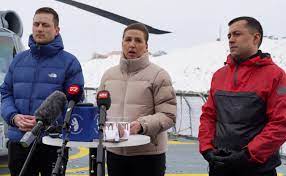
In a bold and clear statement, Danish Prime Minister Mette Frederiksen stood side-by-side with Greenland’s leaders and rejected recent U.S. pressure to take control of the island. “You can’t annex other countries,” she said firmly during an official three-day visit to Greenland’s capital, Nuuk.
This visit comes in response to renewed interest from former U.S. President Donald Trump and his team, who have repeatedly pushed for U.S. control over Greenland, claiming national security concerns. The pressure has intensified under Trump’s new campaign for the White House, with his allies now making more aggressive moves.
The U.S. Delegation That Sparked Outrage
Just a week earlier, U.S. Vice President JD Vance made a surprise visit to Greenland. The trip was met with criticism and concern from both Greenlanders and Danes. Vance echoed Trump’s ambitions, saying the island should come under American control for “security reasons.”
He also criticized Denmark for not investing enough in Arctic defense and claimed the country had “not done a good job” for the Greenlandic people. The remarks caused immediate backlash, with Greenland’s leaders calling the comments disrespectful and out of touch.
Denmark Responds: “Greenland Is Not for Sale”
In a powerful show of unity, Prime Minister Frederiksen toured Nuuk on a Danish Navy patrol boat, joined by current Greenlandic Prime Minister Jens-Frederik Nielsen and former leader Mute Egede. Their message was loud and clear: Greenland is not up for negotiation.
Frederiksen told reporters, “With the pressure put on Greenland by the Americans, in terms of sovereignty, borders, and the future, we need to stay united.” She emphasized Denmark’s support for Greenland’s right to self-determination, while also pushing back against any foreign “claims.”
Growing U.S. Pressure and Danish Diplomacy
While Frederiksen made her statement on Greenland’s soil, U.S. Secretary of State Marco Rubio met with Danish Foreign Minister Lars Løkke Rasmussen in Brussels. According to a U.S. State Department release, Rubio “reaffirmed the strong relationship” between the two countries.
But Rasmussen made it clear that while Greenland can choose its future, Denmark will object to any outside attempts to claim it.
Strengthening Arctic Defenses—but on Denmark’s Terms
While rejecting annexation attempts, Frederiksen acknowledged the need for greater Arctic security. She proposed closer military collaboration with the United States, but only through cooperation—not coercion.
“Threats from our closest ally are not the way forward,” she said, pointing out the irony of being pressured by a country Denmark has long admired.
To underscore her point, Frederiksen announced that Denmark is boosting its military presence in the Arctic—but under Danish control.
Greenland’s Leaders Speak Out: “We’re Not for Sale”
Former Greenlandic Prime Minister Mute Egede reminded the public that the island has cooperated with the U.S. for nearly 80 years. He pointed to the 1951 Pituffik Space Base agreement between Denmark and the U.S. as proof of mutual security cooperation.
But Egede was clear: “Greenland is not for sale.”
Greenland wants trade, tourism, and partnership with the U.S.—not ownership.
Public Reactions: Cheering in Nuuk
During Frederiksen’s visit, local support was visible in Nuuk. According to Danish broadcaster DR, crowds gathered to wave, and some even shouted from their windows. One person yelled: “Hey Mette! Thanks for being here.”
The warm welcome highlighted the importance of her trip. Mikaela Engell, former Danish High Commissioner to Greenland, told AFP that it was “very reassuring” for Greenlanders to see the Danish leader standing with them in person.
Greenland’s Complicated Road to Independence
Though Greenland has been under Danish rule for around 300 years, it now governs most of its own domestic affairs. Foreign and defense policies, however, are still controlled by Copenhagen.
Since 2009, Greenland has had the legal right to hold an independence referendum, and public support for independence is high. Polls show that most Greenlanders want to eventually break away from Denmark—but not to join the United States.
Of Greenland’s six main political parties, five favor independence. What they can’t agree on is how fast it should happen.
A New Coalition, A Gradual Approach
In March, Greenland formed a new coalition government led by the center-right Democrats party. The new leadership supports a slow and steady path to independence, focusing on economic growth and stability.
Experts say Greenland needs to develop its economy and infrastructure before it can truly break away from Denmark.
Unity in the Face of Pressure
The latest round of U.S. interest in Greenland has reminded the world that Arctic politics are heating up. As climate change opens up new shipping routes and access to natural resources, countries like the U.S., Russia, and China are all eyeing the region.
But Denmark and Greenland just sent a strong message: Their future won’t be decided by outside forces.
For now, the Arctic island remains part of the Danish kingdom, but with an eye toward eventual independence—on its own terms, and in its own time.