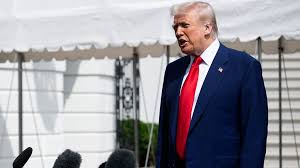
Wall Street in Freefall! Trump’s Tariffs Spark Biggest Stock Crash Since COVID
In a move that has sent shockwaves through global financial markets, President Donald Trump announced sweeping new tariffs on imports, leading to the steepest decline in U.S. stocks since the 2020 economic downturn. The decision has prompted retaliatory measures from major trading partners, including China and the European Union, raising concerns about a potential global trade war.
Unprecedented Tariffs Spark Market Turmoil
On April 3, 2025, President Trump unveiled a comprehensive tariff plan imposing a minimum 10% duty on all imports, with significantly higher rates targeting specific countries and products. Notably, Chinese imports are subjected to an aggregate 54% tariff, while the European Union faces duties of 20%. The administration asserts that these measures aim to boost federal revenues and encourage domestic manufacturing.
Immediate Impact on U.S. Stock Markets
The announcement triggered a massive sell-off on Wall Street
-
Dow Jones Industrial Average: Plummeted 1,679 points, a 4% drop, marking its worst day since 2020.
-
S&P 500: Fell by 4.84%, erasing approximately $3.1 trillion in market value.
-
Nasdaq Composite: Dropped nearly 6%, with tech giants losing a combined $1 trillion.
Companies heavily reliant on international supply chains bore the brunt of the decline. Apple’s shares fell over 9%, while Nike experienced a more than 14% drop.
Global Markets and Political Reactions
The ripple effects were felt worldwide:
-
Asia-Pacific: Japan’s Nikkei 225 index fell by 2.7%, and Australia’s ASX 200 declined by 1.6%.
-
Europe: The UK’s FTSE 100 dropped 1.5%, with other European markets experiencing similar declines.
In response to the U.S. tariffs, China and the European Union have vowed retaliation. French President Emmanuel Macron called for European firms to suspend planned investments in the U.S., signaling escalating tensions.
Economic Implications and Expert Warnings
Economists warn that the tariffs could lead to stagflation—a combination of stagnant economic growth and rising inflation. The World Trade Organization expressed deep concern, estimating that global trade volumes could shrink by 1% this year. Companies now face the dilemma of absorbing the increased costs or passing them on to consumers, potentially leading to higher prices and reduced sales.
Industry-Specific Consequences
Certain sectors are particularly vulnerable:
-
Automotive: Stellantis, the maker of Jeep and Fiat, announced temporary halts in production at factories in Mexico and Canada, leading to layoffs of 900 employees in the U.S.
-
Retail: Companies like Restoration Hardware, which sources over 70% of its products from Asia, saw stock drops of up to 40%.
Investor Sentiment and Future Outlook
Investor confidence has been shaken, with fears of a prolonged trade war. The U.S. dollar weakened against other currencies, and gold prices, often seen as a safe haven, reached record highs before stabilizing. Financial advisors caution that continued market volatility could have long-term effects on retirement savings and investment portfolios.
President Trump’s tariff announcement has set off a chain reaction affecting global markets, industries, and economies. As nations prepare to retaliate and companies grapple with increased costs, the full impact of these measures remains to be seen. Investors and consumers alike are advised to stay informed and exercise caution in the face of escalating trade tensions.